Plasma Donation Info
The Ultimate Guide to Plasma Donation
Jun 29, 2026

Looking to make a difference? Your plasma can be used to create life-saving medicines. It’s what makes donating plasma a great way to help others. That’s right—you can be a real-life hero to someone in need.
Whether you’re a first-time donor or you’ve visited one of our centers before, below you’ll find a complete guide to plasma donation, including how plasma is used and what to know before, during, and after each donation.
We look forward to being a part of your plasma donation journey.
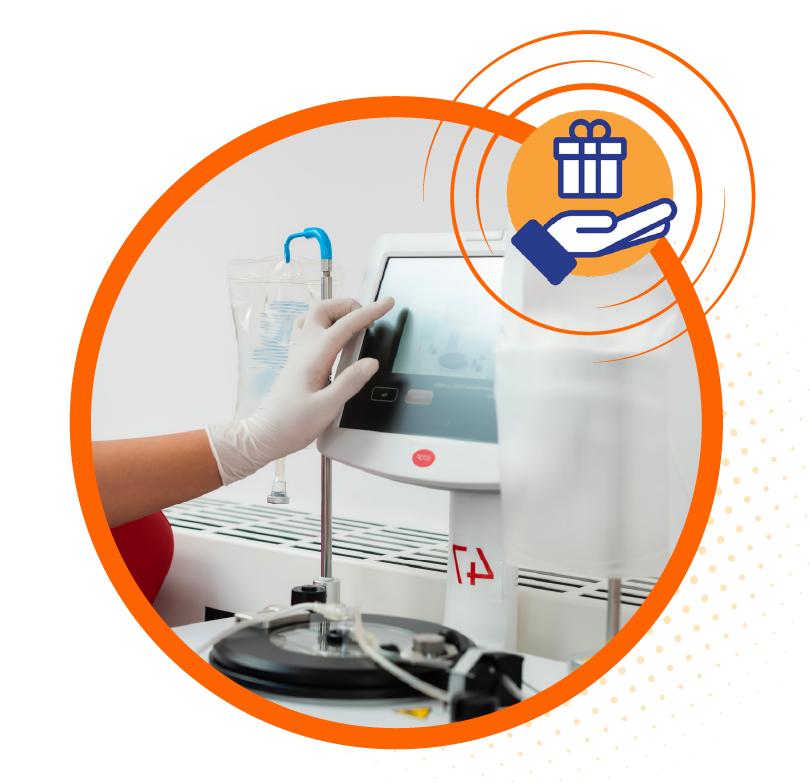
Plasma is the pale, yellow liquid that makes up about 55% of our blood.1 It’s super important because it helps move proteins, platelets, and blood cells around the body. Plus it contains antibodies that help us fight diseases.
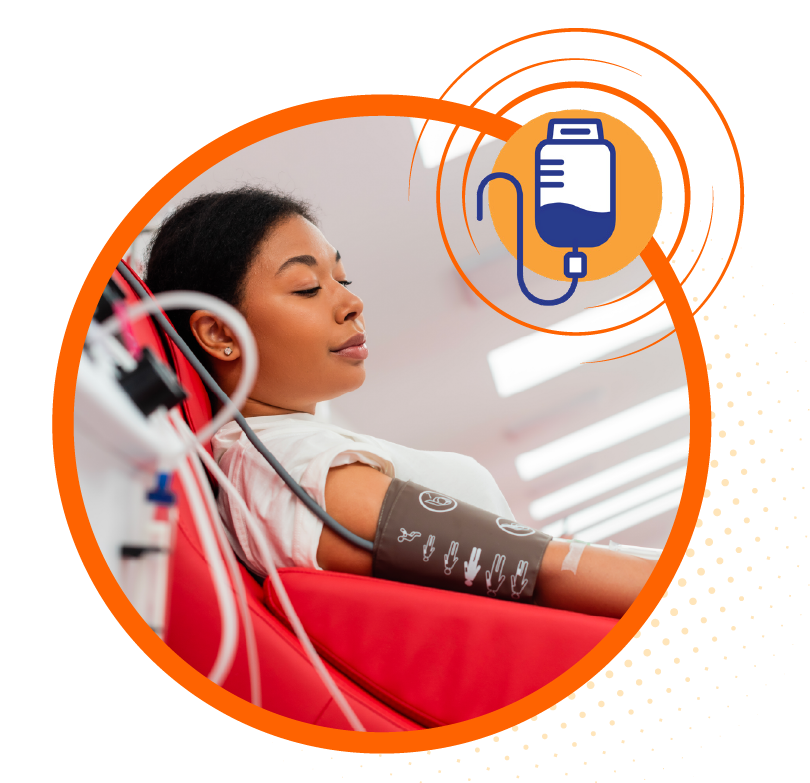
Plasma donation is a little different from blood donation, however. When you donate whole blood, all components are collected, including red and white blood cells and platelets. When you donate plasma, the plasma is separated from the other components of your blood. We keep your plasma, and the rest of the blood is returned to your body. And don’t worry! Our skilled staff makes the whole process comfortable and stress-free.
One important thing to know is that plasma can’t be made in a lab. The medicines that are created from plasma rely entirely on donors like you. These treatments can help people with weak immune systems, rare and chronic diseases, and many other conditions.
One reason people donate plasma is to help others. Some donors have even been inspired to act by family members or friends who depend on plasma-derived therapies. It can take many donations to create a single plasma therapy, so every donation counts!
Read on to learn more about the process and what to expect at your appointments.


It's easy to prepare for your donation with the helpful tips below.
| Tips for Success | Things to Avoid |
| View our donor checklist before your appointment to make sure you bring the right documents to your donation. | Steer clear of fatty foods like burgers and fried snacks before you donate. As tempting as those foods are, they can impact your plasma, and you may have to reschedule your donation. |
| Hydration is your new best friend! Sip on water or a sports drink 24-48 hours before your visit. Your body (and your plasma!) will thank you. | We love coffee too, but it’s best to stay away from beverages with caffeine before donating. They can dehydrate you and raise your heart rate. |
| Eat protein and iron-rich foods the day before and the day of your donation. Proteins are a key part of your plasma and plasma-derived therapies. | Skip alcoholic beverages starting the night before your donation, since they can dehydrate you. Also, any individual showing physical or mental effects of alcohol or recreational drug use at check-in will be asked to reschedule. |
| Aim for 7 hours of sleep the night before donating to keep your energy level up. | Don’t come in if you feel sick. Instead, reschedule your appointment when you’re feeling better. |
Your first donation appointment will likely take about 2 hours. After that, donations tend to be between 1 and 1.5 hours. Just be aware that donation times may vary by individual. Here’s a quick look at a typical appointment:
| Check-In (10-15 minutes) | Medical Screening (10-30 minutes) |
| Arrive 10 minutes before your appointment time and make sure you have your approved documentation with you. | We’ll check your vitals, hematocrit level, and protein level, then review your medical history. |
| Donation (45-60 minutes) | Check-Out (10-15 minutes) |
| Relax and enjoy the stress-free process in one of our comfortable reclining chairs. | You’re all done! You can rest, check out, and schedule your next appointment. |
After donating, your body will be busy regenerating plasma. We’ve put together some pointers to help you bounce back with ease! Stay energized between donations with these helpful dos and don’ts:


Your first donation takes a little longer than future visits. We’ll need some extra time to verify your information and perform a full medical screening. This full screening is required at least once a year. At most other donation appointments, you’ll have a shorter “mini” medical screening.
| Medical Screening First Donation & At Least Once a Year | “Mini” Medical Screening All Other Donations |
| 1. Medical history interview 2. Physical examination 3. Blood test | 1. Simple health questionnaire 2. Quick check of vital signs (temperature, blood pressure, pulse, and weight) 3. Blood test to check hematocrit and protein levels |

Typical donation time for first-time donors
| A Valid ID | Social Security Card |
| We’ll need an ID that includes a photo, signature, and date-of-birth (such as a valid driver’s license, passport, or certified birth certificate). | If you don’t have a Social Security card, you can use a Permanent Resident Card (PRC), Border Crossing Card (BCC), or Laser Visa Number. |
| Proof of Address | List of Medications You TakeCheck-Out |
| You’ll need to have a permanent address within 40 miles of the center. Just bring an ID with the address listed, a signed lease, a utility bill, or a piece of mail sent via USPS within the past two months. | Bring a list of your current medications and those you’ve taken in the past year, since some medications can impact your blood. |
To help you prepare for your appointment, we’ve answered the most common questions we get from first-time donors.
Most donors feel little to no pain. You may feel a quick sting from the needle going in, but that’s about it.
On average, it takes about 2 hours for a first-time donation. After that, donations typically take between 1 and 1.5 hours. However, donation times will vary based on several factors.
No formal dress code here! Wear comfy clothes, but make sure we have access to both arms. Some donors get a little cold during donations, so feel free to bring easy-to-remove layers or a light blanket.
Side effects tend to be minimal for donors, but it’s possible to feel a little woozy afterward. If you do feel dizzy or faint after donating, call your donation center. They may suggest resting with your feet elevated, drinking something sweet, or eating a small bite.
For safety reasons, our donation centers do not allow anyone under the age of 18. Please make plans for childcare during your appointment.
We don’t allow outside food or drinks. If you have allergies or dietary needs, we can make exceptions. Just let our team know.
Yes! We encourage donors to make the most of their time donating. You can bring a book, text family and friends, listen to a podcast, or watch something on your mobile device. Our centers even provide free wi-fi! Just remember to bring headphones and only make phone calls in the lobby.

To donate plasma, you must bring the documents mentioned above and be…
18+ years old
At least 110 lbs.
In overall good health

| Drugs & Medications | Drugs and medications can affect your blood, so it helps to bring a list of any drugs or medications you’re currently taking. That way, our staff can check for any potential issues. |
| Medical Conditions | Certain medical conditions can make it unsafe to donate. During your medical screening, our staff will review your health history to see if and when you’re able to donate. |
| Medical Procedures | Some procedures require that you wait several days or months before donating plasma. Please talk with our staff about any recent procedures to see if it’s safe to donate. |
| Tattoos & Piercings | You can donate plasma with tattoos or piercings if they are more than four months old. You’ll also need two tattoo-free areas on the inner bend of your arm so we can draw blood. |
| Travel | If your travels have taken you to a country with high rates of malaria, Zika virus, or Ebola, you may not be able to donate, or you may need to wait a while. |
| Blood & Platelet Donations | After donating one unit of whole blood, you can donate plasma after eight weeks (or 56 days). After donating a double unit of red cells, you can donate plasma after 16 weeks (or 112 days). |
For a full list of eligibility requirements, click here. If you’re still not sure if you can donate, our staff will let you know during your medical screening.
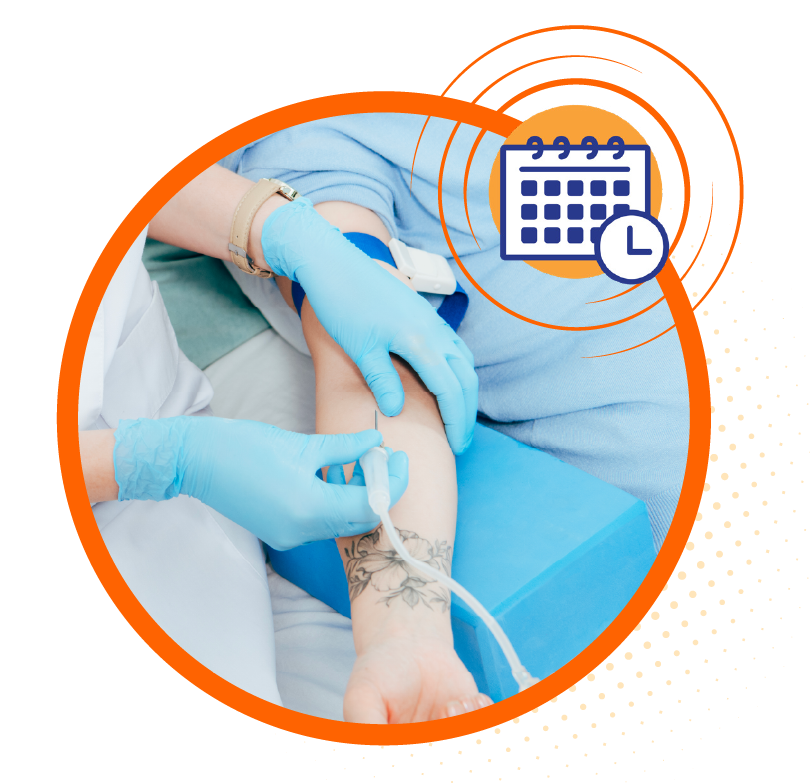
With plenty of fluids and rest, your body’s plasma is replaced within about 48 hours. Pretty incredible, right? This means if you’re in good health, it’s generally safe for you to donate twice every seven days. Per FDA regulations, you cannot donate more than once in a two-day period.
2 The number of calendar days you must wait between donations | 2 The number of donations you can make in a seven-day period |
And if you’re a first-time donor, just know that it takes two donations before we can use your plasma. We recommend you schedule your second donation within six months. Repeat donors who make time to save lives are always needed! We even have special incentives for frequent donors. Check with your local center for current promotions.

You’ll feel at ease the moment you step into one of our state-of-the-art centers. That’s because our expertly trained staff prioritize safety and cleanliness every step of the way.
Our centers follow strict safety guidelines:

Equipment is cleaned and disinfected per procedures.
Staff wear protective gear such as gloves and face shields.
The collection site on your arm is cleaned to reduce exposure to bacteria.
Your safety starts at check-in with a quick eligibility check and medical screening, where we check your:

You’ll be in good hands—our team is there by your side to make sure you feel well from check-in to check-out.

BioLife compensates you for your time donating. It’s our way of saying thank you for helping others!
After each successful donation, we’ll load payment on your BioLife Debit Card within 24 hours. This Debit Mastercard gives you safe, quick, and easy access to your funds—no approval or credit check required.

| Missed Appointment | Please give us at least 24 hours’ notice if you need to miss an appointment. Simply contact us or use the app to reschedule your donation. Unfortunately, we can’t compensate you for missed appointments. |
| Incomplete Donation | Sometimes, donors can’t give enough plasma to qualify for a complete donation. It’s nothing to worry about! Our team will help you schedule a time to try again and give you tips for a successful donation so you can receive your compensation. |

We encourage you to consult the tax specialist who knows your situation best.
BioLife follows all reporting rules for plasma donation fees under the current U.S. healthcare law. However, you won’t receive any tax documents from us at the end of the year.

We love to celebrate donors who make the decision to help others. We’re proud to offer promotions and bonuses for new and returning donors alike. We’ve even got referral bonuses! Check your local center for current offers.
| Buddy Bonus | My BioLife Rewards |
| Get rewarded each time someone you refer successfully donates. It’s a great way to increase your impact and receive extra funds. Refer a friend today. | Earn loyalty reward points for completing certain activities. Points can be redeemed for additional funds on your BioLife Debit Card. Learn more here. |
Curious what happens to your plasma after you donate? Follow below to trace the steps your plasma takes on its way to making life-saving therapies. The entire process can take up to 12 months!
Once your plasma is collected, the center freezes and stores it in preparation for the next step.
A sample of your plasma is sent to a testing laboratory, where it goes through safety and quality tests. These tests make sure that any therapies created from your plasma are safe and effective.
Your plasma is thawed then separated into its individual proteins. These proteins each have an important function, like helping your blood clot, carrying molecules from one part of your body to another, and fighting infection.3
Using a series of techniques, each of your isolated proteins is purified to prepare the proteins to be used in treatments.
Scientists take your raw, purified proteins and make them into life-saving medications. For example, they might create a medication from your fibrin protein that helps blood clot for a patient with hemophilia whose blood does not clot the way it should.
The medication is put into vials or bags, which go through a final round of quality checks. The packages are labeled and shipped to healthcare facilities where patients receive treatment. Your plasma’s journey is now over, but its impact on the lives of patients continues!
Click below to find your local center and schedule an appointment.
1. “Plasma,” Cleveland Clinic, last reviewed March 13, 2025, https://my.clevelandclinic.org/health/body/22865-plasma
2. “Rare Diseases,” Plasma Protein Therapeutics Association, accessed October 23, 2025, https://www.pptaglobal.org/material/rare-diseases
3. “From Plasma to Medicines by Fractionation,” International Plasma and Fractionation Association, accessed September 25, 2025, https://ipfa.nl/from-plasma-to-medicines-by-fractionation/

Download Our App


BIOLIFE and  are registered trademarks of Baxalta Incorporated. Takeda and
  are registered trademarks of Takeda Pharmaceutical Company Limited. © 2026 Takeda Pharmaceutical Company Limited. All rights reserved.


BIOLIFE and are registered trademarks of Baxalta Incorporated. Takeda and are registered trademarks of Takeda Pharmaceutical Company Limited. © 2026 Takeda Pharmaceutical Company Limited. All rights reserved.